
Jacopo di Benedetto was born in Todi, in the San Silvestro district, around 1230.

The nickname ‘Jacopone’, by which he is now universally known, was used by himself in the prison laud, “What will you do, friar Jacovone?”. He gave himself this nickname with obvious self-deprecating irony, contrasting a declaration of grandeur with the humiliation he was undergoing. LAUDE LV (55)
- Che farai fra Jacovone? Ei venuto al paragone
- What will you do friar Jacopone? Now you’re put to the test.
— This is just an excerpt! If you want to read more just click CHE FARAI FRA JACOVONE

He lived for 76 years, notable for his time. His life can be divided exactly into two parts: 38 years before and 38 years after his conversion.
The first crisis
Before his conversion, Jacopone’s life followed the typical pattern for a boy and then a lively, intelligent, enterprising, arrogant and vain young man of the wealthy bourgeoisie of the city. After gaining a legal degree, perhaps at the University of Bologna, he probably practiced as an attorney or notary of the Municipality of Todi, dealing with inheritance disputes and property transfers. At 35 Jacopone was not happy with himself, nor with his work, his family, or the society in which he lived. He went through a very profound crisis of identity and morals, perhaps bordering on a real stress disorder.

At 38 he made the drastic decision to join the Franciscan Third Order. He renounced his share of the family inheritance and embraced the three vows of poverty, chastity and obedience to the rules of the Order, beginning to wander around Todi as a poor man. He began to write poems in the form of laude, prayer and song, in the vernacular, the language of the people so that the illiterate poor of his time could learn and sing them easily.
— Unfortunately there is no longer any music associated with the lyrics by Jacopone da Todi…everything got lost over centuries. But there are other collections of Laudi by different authors (many of whome are anonymous) which are still perfectly preserved, such as the famous Laudario Magliabechiano (1300). In this laudario you can find the Lent laude “Voi ch’amate lo criatore” (you who love the Creator) LISTEN TO THE LAUDE sung by Elisa in San Fortunato church!
Among the people of Todi there were, as usual, those who pretended not to know him, those who criticized him, those who had compassion for him and some who understood him and shared his spirit.
At about 48 years of age, Jacopone was admitted as a friar in the Franciscan convent of San Fortunato. While carrying out the humblest duties for the community of friars, he devoted most of his time to prayer, meditation, study of the Scriptures and poetry. In this, the most productive period of his life, Jacopone perfected his commitment as a poet and mystic, establishing himself as one of the greatest representatives of the culture and spirituality of his time. He remained in the convent of San Fortunato until the age of about 66.


The second crisis
Jacopone was one of the inspirational leaders of the Franciscan ‘Spirituals’, who wanted to respect absolutely St. Francis’ rule of poverty. He wrote sorrowful lauds, lamenting the state to which the Church was reduced. Pope Boniface VIII excommunicated and imprisoned Jacopone, at the age of about 68, in the underground prison of the convent of San Fortunato. He remained there for five very hard years, chained by his wrists and ankles, in darkness, cold and damp, among mice and cockroaches and the stench of a latrine drain, living on bread and onions…

…But these years of deprivation and suffering are also the zenith of Jacopone’s mystical journey. Jacopone responded to his condemnation with definitive self-renunciation, totally identifying himself with the crucified God. He abandoned all resentment. He was in chains, but in the deepest reality of his spirit, he had never been so free! This was the time when he composed the Laude LXXVI (76) “O iubelo del core”- O EXULTATION OF THE HEART
- O iubelo del core, che fai cantar d’amore!
Quanno iubel se scalda, sí fa l’omo cantare
e la lengua barbaglia e non sa che parlare:
dentro non pò celare, tanto è granne ’l dolzore!
- O exultation of the heart, making us sing love songs! When the exultation takes hold, it sets us singing: the tongue begins to bubble , knowing not what to utter; joy so overpowering cannot be covered!
— This is just an excerpt! If you want to learn more click here O IUBELO DEL CORE
When Boniface VIII died his successor, Benedict XI, granted Jacopone absolution from excommunication and freed him from captivity, aged about 73. Released from prison and living in the small convent of the Clarisse (Poor Clares) in Collazzone, he was able to express the joy of mystical ecstasy in verses whose beauty has never been equaled in religious poetry. He died peacefully on Christmas Eve 1306, assisted by his friend, Blessed Giovanni della Verna.
The great mystic
Jacopone pursued the Franciscan ideal of perfect humility. He stripped himself of all egotism, pride, arrogance and judgmentalism and eventually learned to live coherently the first and greatest beatitude of the Gospel, “Blessed are the poor in spirit”.

He was averse to hypocrisy, miraculism and the fanatical penances so common in the religiosity of his time. He loved the crucified God with ardent love, to the point of being united with him in ecstasies that left sublime traces in his poetry.
Recent International research reveals that Jacopone was not only a great poet, but also a great Christian mystic. According to the theologian Alvaro Cacciotti, a Franciscan priest, Jacopone’s mysticism is the apex of Franciscan spirituality. Jacopone’s mysticism is both practical and universal. Recent studies have highlighted the profound affinities between Jacopone and Islamic mystics such as Amir Khusrau, the great Indian poet and mystic, and Jalaloddin Rumi, the great Persian poet and mystic.
THE POETRY
We have 92 Laudas by Jacopone
The credit for having transmitted to us Jacopone’s authentic laudas goes to the Florentine priest and typographer Francesco Bonaccorsi. In 1490 he was the first to publish a very accurate collection of laudas, deriving from ancient manuscripts purified of the various imitations and counterfeits that had accumulated in the two centuries that had passed since Jacopone’s death.
Jacopone’s poetry represents a work of extraordinary richness, in which the poet expresses tenderness and passion, pain and jubilation, practical realism and mystical spirituality, tongue-in-cheek irony and biting sarcasm. Jacopone masters the canons of lyric poetry, the expressive resources of dialogue and contrast, as well as those of dramatic representation.
Many Italian Philologists during the last century dedicated themselves to the study of Jacopone’s language and to verifying the authenticity of the laudas; among them we remember, in particular, Franca Ageno, Franco Mancini, Matteo Leonardi and Enrico Menestò. For no more than a century (more than six centuries after the poet’s death), we have finally had organised texts on which to base the sure knowledge of the great poet’s life, thought and spiritual life.
The Legend

From the second half of the 16th century to today, Jacopone’s life has been told with a legend that has profoundly altered his image and which is in evident contrast with the autobiographical testimony that the poet offers us in the Laudi. An analysis of this historical fake that risked destroying Jacopone’s memory is reported in the book of Laudi (edited by C. Peri, Fabbri Editore, 2020, p. 353).
The serious damage and prejudice of this legend to historical truth can be summarized in four fake information: the first two are in addition (two fakes, stories of non-existent facts, are added), while the second two are in subtraction (two true facts are eliminated from the story):
Two fakes were added…
– The legend presents an invented account of Jacopone’s conversion. The wife Vanna, beloved and deeply religious, who with her tragic death would have determined the conversion of Jacopone, never existed. A little romance was invented to make the story more attractive to unsuspecting readers.
– The humiliations that Jacopone would have imposed on himself after his conversion, which portray him as an eccentric on the verge of insanity, are part of the nonsense that was told to edify the people, especially in the Catholic and Franciscan milieu.
… and Two True Facts were Concealed
– The legend completely ignores the almost 20 years that Jacopone spent as a Minor friar in the convent of San Fortunato. These are the 20 most important and fruitful years of his mystical journey and poetic production.
– The legend ends Jacopone’s life in 1296 by eliminating the last 10 years of his life (in fact, he died in 1306). The memory of his contrast with Boniface VIII, his excommunication and his sentence to prison were hidden, but also the highest moment of his spirituality.

The STABAT MATER
The Stabat Mater is a liturgical hymn of the Catholic Church, written by Jacopone in Latin, that is, in the language of religious celebrations of his time. In Jacopone’s inspiration, the drama of the Virgin Mary is an icon of human pain, because there is no greater pain than that of a mother who witnesses the torture and killing of her child. It is a drama that has been repeated thousands of times in history: for this reason,

Jacopone’s verses have moved people of every country and every creed, religious or agnostic, inspiring many masterpieces of sacred music. There is even a very fine website, The Ultimate Stabat Mater Website (https://stabatmater.info), entirely devoted to the richness of the many versions of the Stabat Mater.
An Irish author, Desmond Fisher, commented on the first tercet of the poem:
Stabat mater dolorosa
juxta crucem lacrimosa,
dum pendebat filius.
“In Latin, the sonorous quality of those first nine words is stunning. The regular
beat and the softly rhyming polysyllable words give the three short lines a depth
and strength no translation could surpass “
— Click and read more about the STABAT MATER by Jacopone da Todi
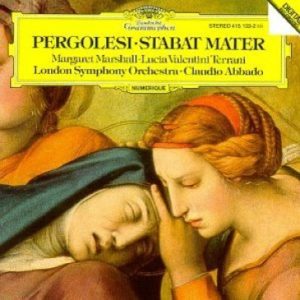
— Check on YouTube and find out how many popular composers have set the Stabat Mater to music! Among the most loved and performed we can mention Giovan Battista Pergolesi and Antonin Dvorak

TEXT BY PROF. CLAUDIO PERI ( — parts by Elisa Picchiotti)
If you want to learn more about this extraordinary man and poet , please visit the ultimate website about him !!! www.jacoponedatodi.org
If you want to be part of the official “Jacopone’s crew” join the “Loving Jacopone” Association (Amare Jacopone)! For more info contact us!
IF THIS ARTICLE INTRIGUED YOU AND MADE YOU WANT TO EXPLORE ALL THE JACOPONE’S PLACES IN TODI, CLICK HERE AND BOOK YOUR JACOPONE’S TOUR!
